Speakers
Description
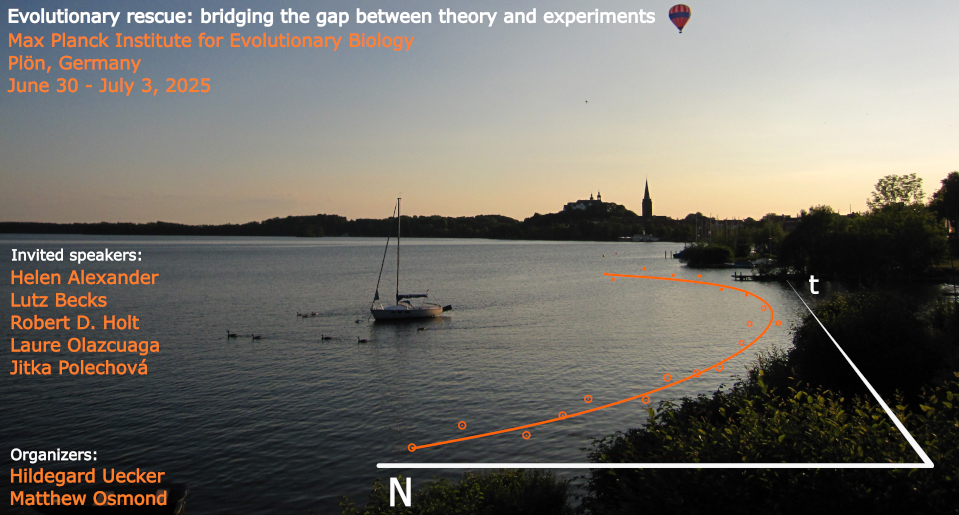
Time-kill experiments are commonly used to characterise the pharmacodynamic properties of antibiotics. During these experiments, a bacterial population is exposed to a specific concentration of an antibiotic over time, typically lasting 24 hours. Given high enough concentrations, a decrease of the bacterial population can be observed, which is used to calculate the kill rate constant for the specific concentration. Unfortunately, evolution cannot simply be “turned off” during these experiments and sometimes regrowth of the population occurs after an initial phase of rapid killing, resulting in the well-known U-shaped curve of evolutionary rescue. During our experiments to characterise the pharmacodynamic properties of fosfomycin, amikacin and their combination for different E. coli strains, regrowth was observed for every concentration (even for the combination). In order to properly assess the pharmacodynamics of these drugs, knowledge on the underlying cause of this short-term rescue is needed. With a mathematical model, we aim to investigate different hypothesis on the underlying reason of the regrowth behaviour. Will this be an example for evolutionary rescue due to de novo evolution or might it result from the initial heterogeneity of the population with respect to antibiotic susceptibility?